
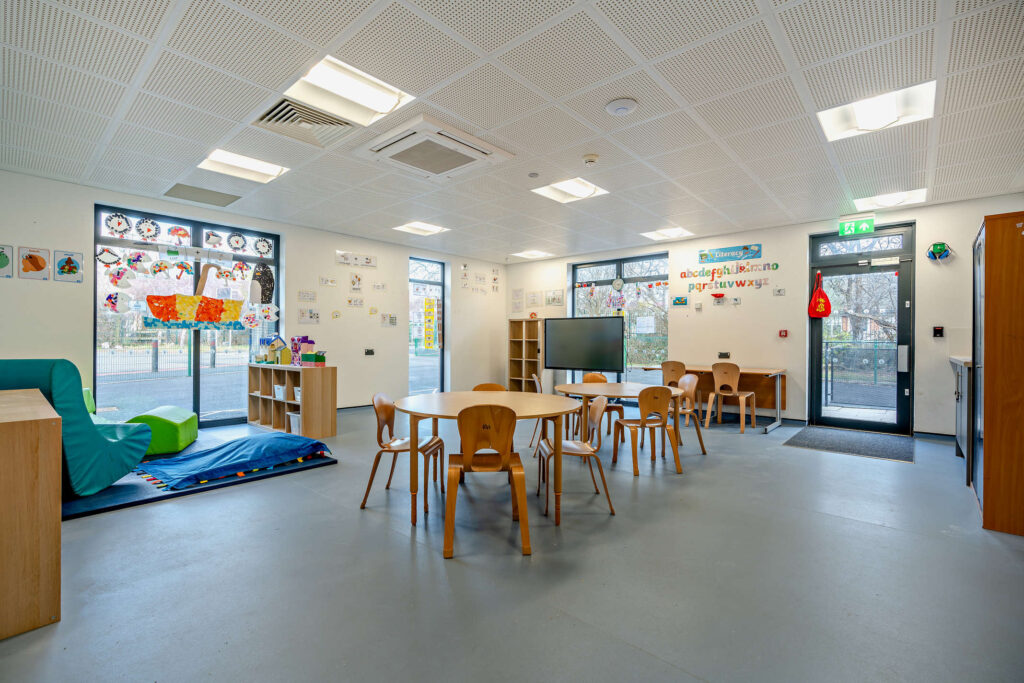
- Sensory design, including lighting, acoustics, and air quality, has the single biggest impact on how autistic pupils experience a classroom
- Clearly zoned spaces with defined purposes reduce anxiety and build independence
- Calm-down areas work best when you design them into the room from the start, not bolt them on as an afterthought
- The building itself matters as much as what goes inside it – natural light, ventilation, and outdoor access fundamentally shape learning outcomes
- Good autism-friendly design benefits every pupil, not just those on the spectrum
Autism is now the most common primary need among pupils with an Education, Health and Care Plan in England. One in three EHCP pupils (33.6%) have autistic spectrum disorder recorded as their primary need, and that number has doubled since 2016. Over 56% of these children attend mainstream schools.
Those are big numbers. And they land in classrooms that were never designed with sensory-sensitive learners in mind.
Most guidance on autism-friendly classrooms focuses on what you put inside the room – swapping fluorescent lights for lamps, adding a visual schedule, putting a bean bag in the corner. That advice matters, and we’ll cover it. But it’s only half the picture. The building itself, its acoustics, its natural light, its connection to the outdoors, shapes how every one of those interior decisions performs.
This article is for school leaders, SENDCos, and estates managers who want practical, evidence-backed guidance on creating classrooms where autistic pupils genuinely thrive. Whether you’re adapting an existing space or planning new provision from scratch, we’ll cover what actually works and what most guidance overlooks.
Why Classroom Design Has Such a Profound Effect on Autistic Pupils
More than 90% of autistic children process sensory information differently. That’s not a personality trait. It’s a neurological reality. Some are hypersensitive to light, sound, or touch. Others are hyposensitive and actively seek sensory input. Many experience both, depending on the sense and the situation.
Traditional classrooms weren’t built for this. The standard model, rows of desks under fluorescent lights in an echo-prone room with walls covered in brightly coloured displays, dates back to the early 1900s. It hasn’t fundamentally changed. And for a child whose brain processes every flicker of a strip light and every chair scrape across a hard floor, that environment doesn’t just distract. It causes genuine distress.
Research published in early 2026 found that autistic children and their parents identify loud classrooms as the single biggest contributor to school anxiety. But it’s not just the obvious noises. Even in a quiet room, autistic pupils pick up sounds most of us filter out: the buzz of fluorescent tubes, the hum of a heating system, the tick of a clock.
The consequences show up in the data. Fewer than half of autistic children say they’re happy at school, and 84% of families rate their child’s teachers’ autism knowledge as below average. When you consider that the environment itself works against these pupils every day, those statistics start to make sense.
Here’s the encouraging part. When you design SEND classrooms for neurodivergent learners with sensory needs in mind, the benefits extend to everyone in the room. Reduced noise improves concentration for all pupils. Better lighting reduces eye strain for staff. Clearer structure helps every child navigate their day. Designers call this the curb-cut effect: changes made for specific needs end up improving things for everybody.
Getting the Sensory Environment Right
If there’s one area where every piece of autism research agrees, it’s this: the sensory environment is the foundation of everything else. Get it wrong, and no amount of visual schedules or calm-down corners will fully compensate. Get it right, and you create a baseline of comfort that makes learning possible.
Lighting That Works With Autistic Pupils, Not Against Them
Fluorescent lighting is consistently the most-cited environmental problem for autistic people. The flicker is imperceptible to most neurotypical individuals, but many autistic children experience it as a persistent, disorienting strobe. Combined with the harsh colour temperature and audible buzz, fluorescent tubes create a background stress that accumulates across the school day.
The fix is straightforward. Replace fluorescents with dimmable LED panels that offer warm, adjustable light. Maximise natural daylight through well-positioned windows, and fit adjustable blinds so pupils and staff can control glare throughout the day. Window placement matters as much as size. High-level windows let in daylight without silhouetting the teacher, which is a common source of visual discomfort.
One detail that’s easy to miss: avoid positioning desks so pupils face directly into bright windows. The contrast between a sunlit window and a darker room interior is genuinely painful for children with visual hypersensitivity.
Acoustic Design and Noise Control
Between 50% and 70% of autistic people experience noise sensitivity. That’s a staggering proportion, and it makes acoustics one of the most impactful design decisions you can make.
Soft flooring (carpet over hard surfaces), acoustic ceiling tiles, sound-absorbing wall panels, and soft furnishings all reduce reverberation within a room. Noise-cancelling headphones and white noise machines offer individual-level solutions for particularly sensitive pupils. But the most effective acoustic interventions happen at the building level. Properly insulated walls and ceilings, double-glazed windows, and considered placement of the classroom away from noisy corridors or playgrounds make a difference that no amount of retrofitted panels can match.
Understanding the design essentials of a modern SEND classroom means treating acoustics as a structural priority, not an afterthought.
Air Quality and Scent
This is the factor most guides skip entirely. Strong smells from cleaning products, air fresheners, and off-gassing from cheap furniture and carpet can overwhelm autistic pupils with olfactory sensitivity. Stale, warm air compounds the problem.
Natural ventilation through openable windows is the simplest solution. Low-VOC materials (paints, flooring, furniture) reduce chemical off-gassing. Some schools use subtle aromatherapy, such as lavender or sage, for calming effects, but this needs careful individual assessment. A scent that soothes one pupil might distress another.
How to Zone Your Classroom for Different Activities
Autistic pupils thrive on predictability. When you use the same physical space for the same type of activity every day, it removes a layer of uncertainty that would otherwise drain cognitive energy. The pupil arrives at the reading table and already knows what’s expected, no verbal instruction needed.
A well-zoned classroom needs at least four distinct areas: group work, one-to-one teaching, independent work, and a sensory break or calm-down space. Use shelving units, mobile dividers, and furniture arrangements to create visual and physical boundaries between zones. Label each area with both pictures and words. Floor markings, whether coloured tape or different carpet tiles, reinforce boundaries without adding clutter.
The question of how big a SEND classroom should be comes up constantly, and it’s a fair one. You need enough square metreage to create meaningful separation between zones without making the room feel cavernous. But remember: larger classrooms for SEND pupils aren’t just about fitting wheelchairs and equipment. Fewer pupils in a bigger space means less noise, less crowding, and better conditions for emotional regulation. That matters enormously for autistic pupils who become easily dysregulated. Purpose-built spaces have an advantage here because you can design the layout around zoning requirements from day one, rather than trying to retrofit zones into a room that was originally built for rows of desks.
Traffic flow matters too. Think about how pupils move between zones. Routes should be intuitive, with clear sightlines. Avoid layouts where pupils have to walk through one activity zone to reach another. That’s a recipe for distraction and accidental disruption.
Desks should face away from windows and doors wherever possible. Autistic pupils are drawn to visual detail, and a window onto a playground or a corridor with passing foot traffic will pull their attention away from learning every time.
Why Flexible Seating Matters
Not every child learns best sitting in a standard chair at a standard desk. Wobble stools, stability balls, standing desks, and bean bags accommodate the different sensory profiles within a single class. Some autistic pupils are sensory seekers who need movement to concentrate. A wobble cushion gives them that input without disrupting anyone else. Others need firm, enclosed seating that provides a sense of physical containment.
Evidence shows that tailored environments benefit SEND students not just academically but emotionally. When pupils have some control over how they sit and where they work, anxiety drops. And that’s when real learning starts.
Designing Calm-Down Spaces That Actually Work
Every autism-friendly classroom needs a calm-down area. That much is common ground across every piece of guidance out there. Where most advice falls short is in treating it as a furniture problem: put a bean bag in the corner and you’re done.
It isn’t that simple.
An effective calm-down space needs visual separation from the main classroom. A child in the middle of sensory overload doesn’t need to see and hear the lesson continuing three metres away. Even a low partition or bookshelf screen makes a meaningful difference. Ideally, the space has some degree of acoustic separation too.
Inside the area, provide soft lighting (never overhead fluorescents), comfortable seating, and a curated selection of sensory tools: weighted blankets, noise-cancelling headphones, fidget items, textured objects. Keep the choice manageable. Too many options become their own source of overwhelm.
Two rules that schools break constantly. First, this space must never double as punishment. If a child associates the calm-down area with being in trouble, they won’t use it when they genuinely need it. Second, practise using the space when the child is calm and regulated. It should feel familiar and positive before it’s ever needed in a moment of crisis.
For schools thinking about new provision, purpose-built classrooms can include breakout alcoves and dedicated sensory rooms designed into the floorplan. One important nuance: not every sensory space should default to low stimulation. Some autistic pupils need sensory input, not just reduction. A well-designed sensory room might deliberately offer lights, sounds, and tactile elements to support engagement and learning. The goal is a tailored sensory environment, not a blanket assumption that quiet and dim is always best. The principles behind calm, purposeful spaces for SEMH learners apply equally here. Regulation needs that you design in from the start are always more effective than those bolted on after.
Visual Supports and Communication-Rich Design
Visual schedules, picture timetables, and first-then boards are non-negotiable in autism-friendly classrooms. For many autistic pupils, a visual representation of the day’s structure does more to reduce anxiety than any verbal reassurance ever could. They know what’s coming. They know when it ends. That predictability is everything.
Use symbol systems like Widgit or Boardmaker to label zones, resources, and storage. Embed these symbols throughout the room and make them available at all times, not just during structured teaching. Communication isn’t something that happens on a timetable. An autistic child who needs to express discomfort or ask for a break needs access to that communication tool right now, not after the next activity finishes.
Visual timers deserve special mention. A Time Timer or similar tool shows pupils exactly how long an activity will last, transforming an open-ended (and therefore anxiety-inducing) task into something with a visible endpoint. Colour-coded systems for storage, resources, and even zones reinforce the predictability that runs through every aspect of good autism-friendly design.
And then there’s the walls. Here’s where well-intentioned teachers often get it wrong. Every poster, display, and decoration that doesn’t serve a current learning purpose is visual noise. Autistic pupils attend to detail. They’ll fixate on a colourful display about last term’s topic while missing the instruction happening right in front of them. The rule is brutal but effective: if it doesn’t teach something relevant right now, take it down.
Why the Building Itself Shapes Every Outcome
Everything we’ve covered so far, from sensory management and zoning to calm-down spaces and visual supports, you can implement in an existing classroom. Plenty of schools do exactly that, and it makes a real difference. But there’s a ceiling to what retrofit can achieve.
Acoustic panels help. Acoustic insulation built into the walls and ceiling from day one works better. Dimmable LEDs improve on fluorescents. Floor-to-ceiling windows that flood the room with natural daylight are transformative. A bean bag in a corner provides a retreat. A purpose-designed breakout alcove with its own soft lighting and acoustic separation provides genuine regulation.
The building is the foundation that determines how far every interior decision can go. And for schools planning new SEND provision, that’s an opportunity to get it right from the start.
It’s also worth recognising that not all autism-friendly classrooms look the same. ASD-specific buildings need robustness, carefully managed spatial transitions, and sensory breakout space. A school designed primarily for speech, language and communication needs would prioritise more therapy and intervention rooms with a freer-flowing layout. SEMH provision needs breakout and de-escalation space with maintained sight lines. These are meaningfully different design briefs, and a purpose-built approach lets you respond to the specific needs of your pupils rather than compromising with a generic space.
Spatial transitions deserve particular attention. One of the biggest challenges with ASD pupils is getting them into a classroom without them feeling confined or funnelled. Our Inclusive Learning Hub concept uses curved walls at the entrance that create a sense of opening up as you move through the building. Angled walls continue that effect, so turning left or right into a classroom feels like stepping into a larger space. Dual-aspect windows reinforce the feeling of openness inside. The rooms don’t actually get bigger with each transition, but they feel like they do, encouraging pupils through the building naturally rather than corralling them. This approach resonated strongly with local authorities and school leaders at recent SEND conferences.
That kind of detailed, needs-led design thinking shows up in our SEND projects across the UK. Beacon Hill School’s 60-place, 10-classroom building was designed specifically around pupils with profound and multiple learning disabilities, incorporating two PMLD bases with hygiene rooms, sensory spaces, and generous specialist storage. The Oaks Specialist College required a 435 m² learning centre with ceiling track hoists, accessible self-care facilities, and a dedicated sensory room. Each building started from the same question: what do these specific pupils need from their environment?
What Biophilic Design Means for Autistic Learners
Biophilic design, the practice of integrating natural elements into built environments, has particularly strong evidence behind it for autistic learners. Research shows that natural materials, daylight, views of greenery, and easy access to outdoor spaces reduce stress responses and improve adaptive functioning in autistic children.
Timber interiors feel warm and safe. Studies have linked wood environments to measurably lower heart rates, and in educational settings designed around biophilic principles, students experience up to 8,600 fewer heartbeats per day compared to conventional classrooms. That’s not a marginal improvement. That’s a fundamentally calmer child, better able to engage with learning.
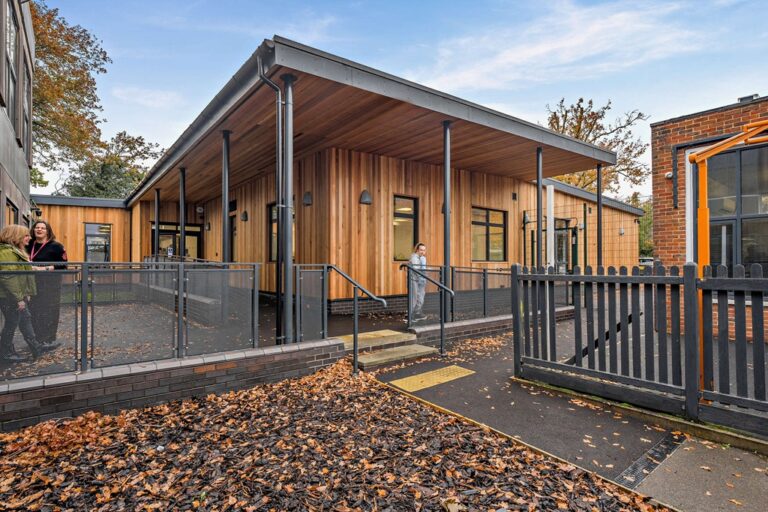
Natural light, managed through well-positioned windows with adjustable shading, reduces reliance on artificial lighting altogether. Views of nature, even through a window, have a restorative effect on concentration. And direct outdoor access, through covered walkways or doors opening onto a garden, smooths the transitions between indoor and outdoor learning that autistic pupils often find most challenging.
Architects, researchers, and specialist educators have all examined whether biophilic modular buildings can benefit autistic people. The evidence points consistently in the same direction: when you surround autistic learners with natural materials, daylight, and thoughtful connections to the outdoors, the environment starts working with their neurology rather than against it.
Purpose-built modular SEND classrooms offer a practical route to making this happen. Schools can design them to spec, manufacture them off-site with minimal disruption to the school day, and install them in weeks rather than months. Buildings designed for 50+ years of use, with acoustic insulation, natural ventilation, net-zero energy performance, and biophilic principles embedded from the ground up.
Frequently Asked Questions
What’s the single most important change I can make to an existing classroom?
Address the lighting first. Replacing fluorescent lights with dimmable LEDs and maximising natural daylight has the biggest immediate impact on comfort and focus for autistic pupils. It’s also one of the least disruptive changes to implement.
Does autism-friendly design only benefit autistic pupils?
No. Research consistently shows that design improvements made for autistic learners, such as reduced noise, better lighting, and clearer spatial structure, improve outcomes for all students. What works for the most sensory-sensitive pupils creates a calmer, more focused environment for everyone.
How much space does an autism-friendly classroom need?
There’s no single answer, but you need enough room for clearly defined zones: group work, independent work, one-to-one, and a calm-down area. Purpose-built spaces can maximise zoning even within modest footprints. The key is thoughtful layout, not sheer square metreage.
Can an existing building be adapted, or do we need something purpose-built?
You can retrofit many improvements, including lighting upgrades, acoustic panels, and layout reorganisation. But for the full benefit of structural acoustic insulation, integrated calm-down spaces, natural ventilation, and biophilic design, a purpose-built classroom gives you far greater control. Understanding the relevant SEND building regulations is a good starting point for any school considering new provision.
Where to Start With Your Classroom
You don’t need to redesign everything overnight. Start with the changes that make the biggest sensory difference: swap out the fluorescents, declutter the walls, and set up a calm-down zone that’s genuinely separate from the main teaching space. Those three moves alone will shift the baseline experience for every autistic pupil in the room.
For schools looking further ahead, whether that’s new classrooms, expanded SEND provision, or replacing ageing temporary buildings, think at the building level. Acoustic insulation, natural light, flexible layouts, outdoor access, and natural materials are dramatically easier and more effective to design in from the start than to retrofit later.
Every change you make for autistic learners makes the classroom better for everyone who uses it. That’s not a compromise. It’s a design principle worth building on.
If you’re planning new SEND provision and want to explore what’s possible on your site and within your budget, we offer a free design consultation with our in-house architects. They understand BB104, acoustic requirements, accessibility standards, and the practical realities of creating spaces that genuinely work for autistic pupils. No obligation, just honest advice on how to get the most from your space.


 Karl Stokes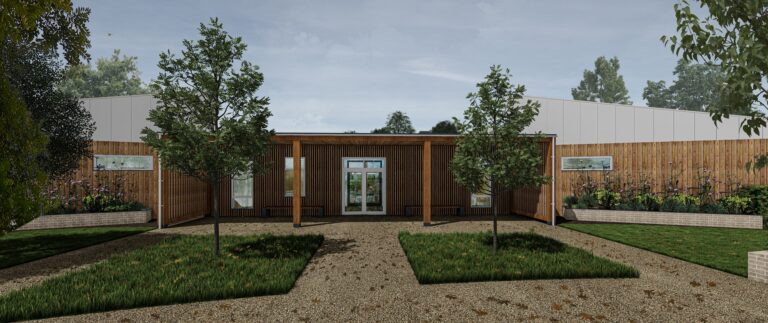
 Christopher Leese