
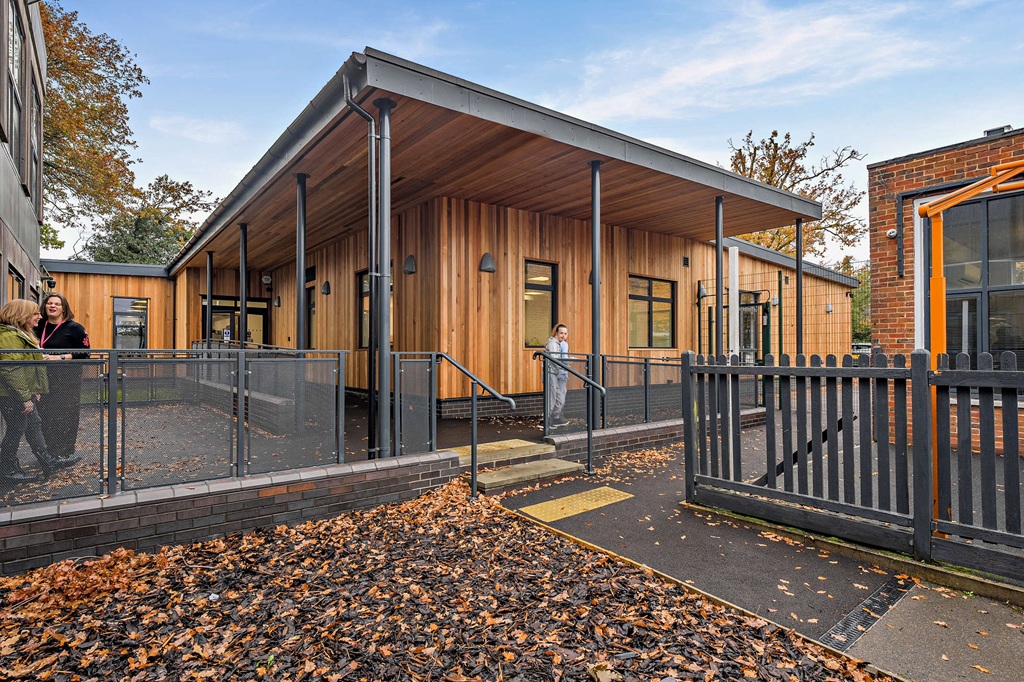
- Bulletin 104 (BB104) is the Department for Education’s official area guidelines for SEND schools and alternative provision facilities, covering space requirements, accessibility standards, and specialist rooms.
- BB104 differs from BB103 (mainstream schools) by requiring additional space for mobility equipment, hygienic care facilities, sensory rooms, and therapy spaces.
- Key compliance areas include classroom sizing, hoist installations, accessible outdoor provision, and inclusive design for pupils with physical, sensory, and cognitive needs.
- Schools should audit their current facilities against BB104 requirements, with modular SEND classrooms offering a faster route to compliance where building work is needed.
- While BB104 is guidance rather than law, compliance is typically required for DfE funding applications and new school building projects.
If you’re planning a SEND building project or expanding your school’s specialist provision, you’ve likely encountered Bulletin 104. Understanding exactly what it requires can feel overwhelming, particularly when you’re balancing educational priorities with construction timelines and budget constraints.
BB104 is the Department for Education’s official area guidelines for SEND schools and alternative provision facilities. It sets out space requirements, accessibility standards, and specifications for specialist rooms that support pupils with complex needs. With approximately 18% of the UK school population now identified as having special educational needs, getting these spaces right has never been more important.
This guide explains what BB104 covers, how it differs from BB103 (which applies to mainstream schools), and what your school needs to do to comply. We’ll also address the 2026 implementation context, with significant SEND funding now available and growing pressure on schools to demonstrate their facilities meet current standards.
Understanding Bulletin 104 and Its Purpose
Bulletin 104 (BB104) is the Department for Education’s official building guidance for SEND schools and alternative provision settings. Published in July 2018, it replaced the earlier Building Bulletin 102 with updated area guidelines that reflect modern accessibility standards and care requirements.
BB104 applies to several types of educational settings:
- Special schools catering for pupils with a range of complex needs
- Alternative provision (AP) settings, including pupil referral units (PRUs)
- Specially resourced provision and units within mainstream schools
The guidance exists because pupils with special educational needs often require fundamentally different learning environments. A child using a wheelchair needs more floor space to move safely. A pupil with sensory processing differences may need access to quiet, regulated spaces. Students with physical support needs require facilities for personal care that simply don’t exist in standard classrooms.
BB104 addresses these requirements by providing recommended area ranges for different room types, guidance on specialist facilities like hygienic care rooms and sensory spaces, and specifications for outdoor learning areas. It’s designed to help architects, school leaders, and local authorities create buildings that genuinely support pupils with physical disabilities, sensory impairments, autism, and other complex needs.
For a deeper look at classroom sizing specifically, our guide on SEND classroom dimensions breaks down the practical requirements.
How BB104 Differs from BB103
The simplest distinction is scope: BB103 covers mainstream schools for pupils aged 3-19, while BB104 applies specifically to SEND and alternative provision settings. But the practical differences run much deeper.
Space allowances differ significantly. BB104 requires larger floor areas throughout to accommodate wheelchairs, walking frames, and other mobility equipment. Circulation spaces (corridors, doorways, and turning areas) need additional width to allow safe movement for pupils using mobility aids or accompanied by support staff.
Specialist facilities are far more extensive under BB104. While BB103 requires at least one accessible hygiene room per mainstream school, BB104 specifies one hygiene room for every 12 non-ambulant pupils. Each must be equipped with fixed hoists, changing beds, and accessible washing facilities. BB104 also mandates spaces that BB103 doesn’t address at all: sensory rooms for regulation, therapy and intervention spaces, and dedicated areas for physiotherapy or occupational therapy.
Some schools need to comply with both. If your mainstream school includes a specially resourced provision or SEND unit, the mainstream areas follow BB103 while the specialist provision must meet BB104 standards. Understanding which guidance applies to each part of your building is essential for accurate planning.
Our detailed guide on SEND building regulations covers additional compliance requirements beyond BB104, including the Equality Act 2010 and Part M of the Building Regulations.
Key Space Requirements Under BB104
BB104 uses a Schedule of Accommodation approach, providing recommended area ranges rather than fixed figures. This flexibility exists because requirements vary significantly depending on whether pupils have primarily physical, sensory, or cognitive needs. What remains consistent is that space per pupil is typically much higher than in mainstream schools.
Classroom and Teaching Spaces
Teaching spaces in SEND settings need larger floor areas to accommodate wheelchairs, walking frames, and other mobility equipment safely. BB104 recommends lower pupil-to-space ratios than BB103, recognising that many pupils need one-to-one or small group support. Layouts should also be flexible, allowing rooms to be adapted for different learning activities and individual needs.
Hygienic Care and Personal Facilities
For non-ambulant pupils, BB104 specifies one hygiene room for every 12 pupil places. Each room must include a fixed hoist (or ceiling tracking system), changing bed, wash hand basin, accessible WC, and accessible shower. Privacy becomes increasingly important for older students, so these facilities need careful positioning. All hygiene rooms require waste disposal facilities such as a sluice.
Sensory and Therapy Rooms
BB104 addresses spaces that mainstream guidance doesn’t cover: quiet rooms for sensory regulation, dedicated therapy and intervention spaces, and areas for motor skills development including soft play. These rooms support pupils who need breaks from stimulating environments or require regular therapeutic input as part of their education. Our work on SEMH facilities like Mountfield Heath demonstrates how these spaces can be designed to support emotional regulation alongside learning.

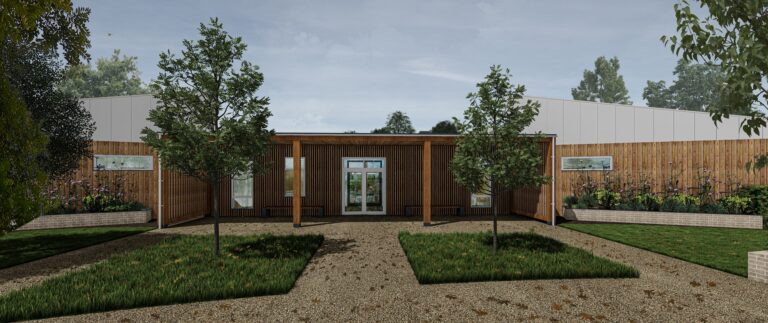
Eco Building for SEMH at Mountfield Heath
Mountfield Heath is a relatively new 3 ½ year old school for students aged 5-11 with some complex and challenging needs. An SEMH Independent Special...
Outdoor Provision Requirements
Unlike BB103, BB104 provides specific guidance on outdoor learning areas. SEND settings should include accessible outdoor spaces that all pupils can use safely, sensory gardens offering varied textures and calming environments, and quiet outdoor zones separate from more active play areas. Design must also consider safe boundaries and clear supervision sightlines for staff.
Biophilic design principles can enhance these outdoor connections, with research showing measurable benefits for pupil wellbeing and concentration.
Accessibility and Inclusive Design Principles
A core principle of BB104 is that accessibility should be designed in from the start, not retrofitted later. This means considering the full range of pupil needs during initial planning rather than adapting spaces after construction.
Physical accessibility requires wider corridors and doorways to accommodate wheelchairs and mobility equipment, with sufficient turning circles at key points. Fixed hoists and ceiling tracking systems should be planned into the building structure, not added as afterthoughts. This affects ceiling heights, structural supports, and electrical provision.
Sensory accessibility covers two distinct areas. For pupils with hearing impairments, BB104 emphasises acoustic treatments that reduce background noise and reverberation, making speech clearer and reducing listening fatigue. The separate Building Bulletin 93 sets specific acoustic standards for schools. For pupils with visual impairments, design should incorporate strong visual contrast between surfaces, clear wayfinding systems, and consistent layouts that support independent navigation. Our SEND hub for visually impaired pupils at Woking High School shows how these principles translate into practice.
Cognitive accessibility is sometimes overlooked but equally important. Clear, logical layouts help pupils with autism or learning difficulties navigate independently. Consistent room arrangements, visual timetables, and predictable environments all reduce cognitive load and support learning.
Beyond pupils, BB104’s accessibility principles extend to everyone using the building. Staff members with disabilities need the same access considerations, and visitors (including parents and carers who may themselves have mobility, sensory, or cognitive needs) should be able to navigate the building independently.

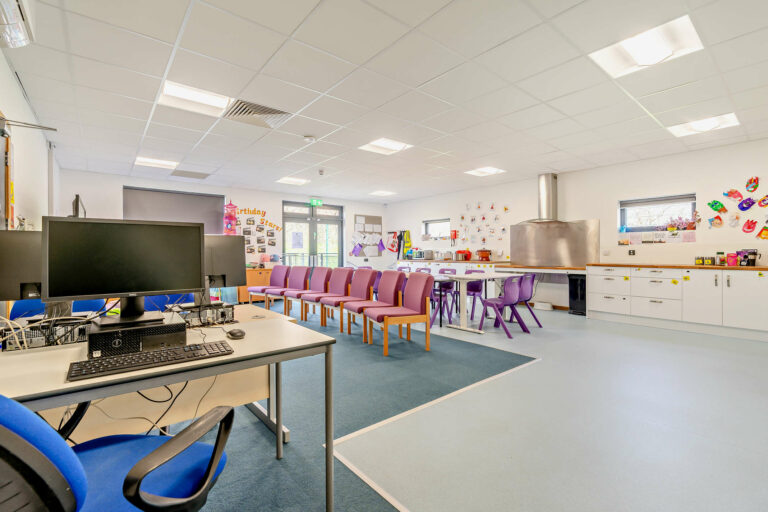
SEND Hub for the Visually Impaired at Woking High School
Surrey County Council have an increasing need for SEND places and wanted to create additional provision for Visually Impaired students at Woking High School. TG...
When Schools Must Comply with BB104
Here’s an important clarification: BB104 is guidance, not statutory regulation. Schools aren’t legally required to comply in the way they must with building regulations. However, the practical reality is different.
New SEND buildings are expected to meet BB104 standards from the outset. If you’re applying for DfE funding, your project will typically need to demonstrate BB104 compliance to be approved. This applies to the Condition Improvement Fund (CIF) and other capital funding routes.
Existing buildings don’t automatically need upgrading, but certain triggers create compliance expectations: major renovations, significant capacity changes, or converting mainstream spaces to SEND provision. If you’re undertaking substantial building work, funders and planners will expect the result to meet current guidance.
For schools with budget constraints, phased implementation is often the practical approach. Prioritise high-impact areas first (hygienic care facilities, accessibility improvements, and sensory spaces) then address remaining requirements as funding allows. The key is having a clear plan that demonstrates commitment to meeting BB104 over time.
How Modular Buildings Help Schools Meet BB104 Standards
Modular construction offers a practical route to BB104 compliance, particularly for schools facing urgent space pressures. But it’s worth understanding both the advantages and the realities.
Speed is the primary benefit. With up to 70% of construction happening off-site in controlled workshop conditions, modular buildings can be delivered significantly faster than traditional construction. Groundwork happens simultaneously with manufacturing, compressing timelines from months to weeks in many cases.
Compliance is achievable with proper specification. Modular buildings can fully meet BB104 requirements when designed correctly. This includes hygienic care rooms with structural provision for ceiling hoists, sensory spaces with appropriate acoustic treatments, and classrooms sized to BB104’s larger floor area recommendations. The key is specifying these requirements from the outset, not assuming standard modules will suffice.
We’ve delivered compliant SEND facilities across the UK, from the 60-place SEND block at Beacon Hill to smaller intervention spaces within mainstream schools. Each project starts with understanding the specific pupil cohort and their needs.
Flexibility matters too. Modular solutions can serve as permanent buildings (designed for 60+ years of use) or provide capacity while main building works progress. This is useful for schools that need to maintain pupil places during phased compliance work.
On cost, modular isn’t always cheaper than traditional construction, but the reduced programme time can offset costs through earlier occupancy and less disruption to school operations. Each project needs individual assessment based on your specific requirements.
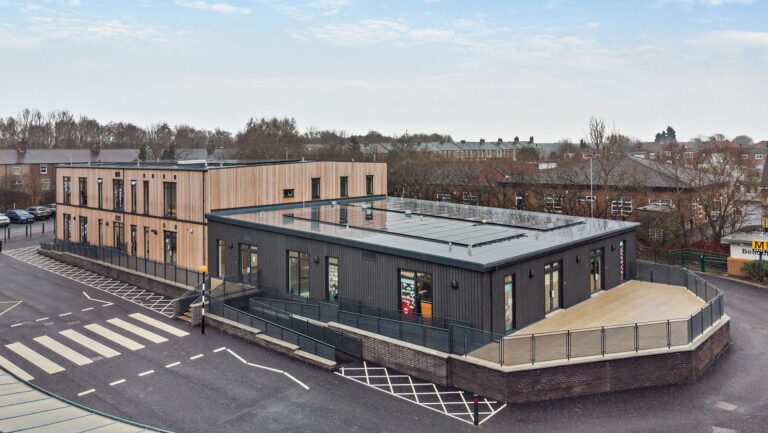
Beacon Hill 60 place SEND facility
Beacon Hill School serves students with severe learning difficulties that include Profound and Multiple Learning Disabilities and Autism. The brief from Newcastle City Council was...
Frequently Asked Questions
What are the specific area requirements per pupil in BB104?
BB104 provides recommended area ranges rather than fixed figures, because space needs vary significantly depending on pupil requirements. A school primarily serving pupils with physical disabilities will need different allocations than one focused on autism or sensory impairments. The DfE’s Schedule of Accommodation tool helps calculate requirements for your specific setting.
What is the difference between BB103 and BB104?
BB103 covers mainstream schools for pupils aged 3-19 with standardised space guidelines. BB104 applies to SEND schools and alternative provision, with larger space allowances, additional specialist facilities (sensory rooms, therapy spaces, hygienic care), and more detailed accessibility requirements.
How do schools calculate BB104 compliance?
Start with the DfE’s Schedule of Accommodation tool, inputting your pupil numbers and the primary needs you’re catering for. This generates recommended areas for each space type. Compare these against your current provision to identify gaps.
What are sensory room specifications under BB104?
BB104 recommends dedicated quiet spaces for sensory regulation but doesn’t prescribe exact specifications. Rooms should allow for reduced stimulation, appropriate lighting control, and sound insulation. Size and features depend on the pupils you’re supporting.
Does BB104 apply to alternative provision and PRUs?
Yes. BB104 explicitly covers alternative provision settings, including pupil referral units (PRUs), as well as special schools and specially resourced provision within mainstream settings.
How much does BB104 compliance cost?
Costs vary enormously depending on your starting point, the scale of work needed, and whether you’re building new or adapting existing spaces. There’s no standard figure. Our team can provide a free design consultation to help you understand what’s involved for your specific situation.
Your Next Steps for BB104 Compliance
Understanding BB104 is the first step. Here’s a practical approach to moving forward:
1. Audit your current facilities. Walk through your building with BB104’s requirements in mind. Where are the gaps in hygienic care provision, accessibility, or specialist spaces? Document what you have and what’s missing.
2. Prioritise high-impact areas. You likely can’t address everything at once. Focus first on hygienic care facilities (essential for pupil dignity), accessibility improvements (affecting daily movement), and sensory spaces (supporting regulation throughout the school day).
3. Explore your options. Modular construction can deliver compliant spaces quickly where speed matters. Traditional building works may suit larger, phased projects. Getting quotes for both approaches helps you make an informed decision.
4. Consult specialists. Work with architects and contractors experienced in SEND facilities. They’ll understand BB104’s practical implications and can help you avoid costly mistakes.
5. Plan for phased delivery. If budget constraints mean you can’t do everything immediately, create a clear roadmap showing how you’ll achieve compliance over time. This demonstrates commitment and supports future funding applications.
If you’re exploring options for BB104-compliant SEND provision, we’d be happy to discuss your requirements. Get in touch for a free consultation and we’ll help you understand what’s possible within your budget and timeline.

 Karl Stokes
 Elle Courtonel