


At a Glance
- Start with your brief. Understand your specific cohort and their needs before making any design decisions.
- Space planning matters. BB104 minimums exist for good reason. Don’t compromise on circulation routes and room sizes.
- Sensory design goes beyond colour. Acoustics, lighting, temperature, and air quality all affect how pupils experience a space.
- Accessibility means more than ramps. Cognitive accessibility through clear layouts and reduced visual clutter supports independence.
- Connect to outdoors. Biophilic design and direct outdoor access create calming environments that support regulation.
- Plan for technology. Power, mounting positions, and storage for devices need designing from the start.
Designing a classroom that genuinely supports pupils with special educational needs is one of the most rewarding challenges in education. Every child arrives with different sensory preferences, learning styles, and physical requirements. Your job is to create a space that works for all of them while meeting BB104 requirements and Equality Act obligations.
The good news? Effective SEND classroom design doesn’t demand unlimited funds. It demands thoughtful decisions about the elements that matter most. This guide walks through the practical process of designing a SEND classroom from initial brief to finished space. You’ll find actionable recommendations grounded in current UK building standards and our experience delivering over 250 educational buildings, including specialist SEND facilities across the country.

Step 1: Understand Your Cohort and Define the Brief
Before sketching layouts or choosing paint colours, you need clarity on who will use this space and what they need from it. A classroom designed for pupils with profound and multiple learning difficulties looks very different from one serving students with social, emotional, and mental health needs.
Start by mapping the range of needs you’re designing for. The SEND Code of Practice identifies four broad areas:
- Communication and interaction needs, including autism
- Cognition and learning difficulties
- Social, emotional and mental health needs
- Sensory and physical needs
Your cohort will likely span several of these categories. Talk to your SENCO, teaching staff, therapists, and where appropriate, pupils themselves. What currently works well? What creates daily friction? Which sensory triggers cause the most difficulty?
Document specific requirements. Do you need space for hoisting equipment? Wheelchair charging points? A therapy area for visiting specialists? Quiet withdrawal space for pupils who become overwhelmed? Storage for specialist equipment?
This brief becomes your design foundation. Without it, you’re likely guessing.
Step 2: Get the Space Planning Right
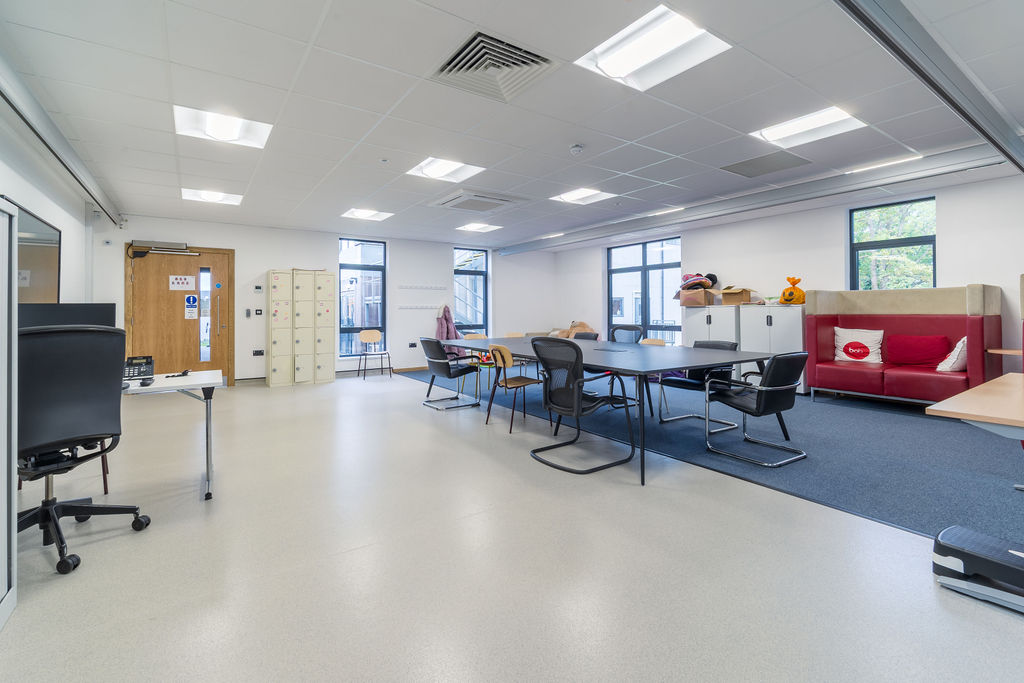
Building Bulletin 104 sets minimum space requirements for SEND provision, and these minimums matter. Cramped classrooms create problems that no amount of clever design can fix.
A typical SEND teaching space requires a minimum net area of 55m² for groups of eight pupils – significantly more than mainstream provision. This reflects the reality of SEND education: pupils need room for mobility equipment, support staff need space to work alongside learners, and everyone benefits from breathing room during difficult moments.
For detailed guidance on specific room sizes, our SEND classroom sizing guide breaks down the BB104 calculations for different settings and needs.
Beyond raw square metres, think carefully about layout and flow:
Circulation routes need to accommodate wheelchairs and mobility aids comfortably. BB104 specifies 2200mm corridor widths for schools with pupils who have mobility difficulties. Within classrooms, allow 1200mm minimum for wheelchair routes between furniture.
Zoning through furniture placement creates distinct areas for different activities without building walls. A bookshelf positioned at right angles forms a natural boundary between focused work and collaborative spaces. Low storage units can define a quiet corner without blocking the sightlines staff need for safeguarding.
Adjacent spaces like withdrawal rooms, small group areas, and accessible toilets should be close enough to reach quickly when a pupil needs them. A calm-down space on the other side of the building is useless in a crisis.
Storage for specialist equipment deserves proper planning. Wheelchairs, standing frames, therapy resources, sensory equipment, and communication devices all need homes. Cluttered corridors and piled corners create hazards and stress.
This is where panelised modular construction offers a genuine advantage. Unlike traditional building, where you work within existing structural constraints, a modular approach allows completely bespoke layouts designed around your specific brief. Our panelised system means walls go exactly where you need them, with room dimensions optimised for your cohort rather than compromised by structural limitations.

Step 3: Design for Sensory Comfort
A genuinely calming classroom isn’t about stripping everything back to white walls and silence. It’s about controlled sensory input that gives pupils predictability while maintaining enough warmth to feel welcoming.
Acoustic Design
Background noise creates genuine barriers for pupils with hearing difficulties or auditory sensitivities. Sounds that neurotypical pupils filter out – HVAC hum, corridor chatter, chairs scraping, rain on the roof – can make concentration impossible for others.
Building Bulletin 93 sets acoustic standards for schools, specifying maximum ambient noise levels of 35 dB for classrooms and reverberation times not exceeding 0.6 seconds. For SEND settings, these standards become even more critical.
Practical acoustic improvements include:
- Acoustic ceiling tiles or panels to reduce reverberation
- Carpet tiles in key zones rather than hard flooring throughout
- Soft furnishings that absorb sound without cluttering the space
- Careful placement of mechanical ventilation to minimise noise at source
Workshop-built modular construction allows precise acoustic specification that’s difficult to achieve on a traditional building site. Insulation values can be tested before panels leave the workshop, and the controlled manufacturing environment eliminates the gaps and inconsistencies that compromise acoustic performance in site-built structures. Our SEND hub for visually impaired students at Woking High School demonstrates this approach, where we worked with acoustic specialists Ecophon to exceed BB93 requirements for students whose remaining senses are heightened.
Lighting That Supports Learning
Flickering fluorescent tubes cause headaches and distraction for many SEND pupils. The solution isn’t simply brighter or dimmer lighting – it’s controllable lighting that adapts to different activities and needs.
LED panels with adjustable colour temperature let you shift from energising cooler tones during active learning to warmer, softer light when calm is needed. Dimmer controls give staff flexibility throughout the day.
Natural daylight remains ideal. Large windows reduce reliance on artificial lighting and connect pupils to the outside world. North-facing glazing provides consistent light without the glare problems of direct sun. Where windows face other directions, blinds or film give you control without blocking daylight entirely.
Our buildings prioritise natural light through generous glazing and features like sun pipes and skylights that bring daylight into areas that would otherwise need artificial lighting. The difference in atmosphere is immediately noticeable.
Temperature and Air Quality
Overheated classrooms impair concentration for any child. For pupils with sensory sensitivities, thermal discomfort becomes genuinely overwhelming. Consistent temperatures between 18-21°C create the predictable environment neurodivergent learners need.
Good ventilation matters equally. Stuffy classrooms with high CO2 levels affect cognitive performance across the board. Mechanical ventilation with heat recovery (MVHR) provides fresh air without the heat loss of open windows in winter or the noise intrusion that can accompany natural ventilation in urban settings. Modern modular buildings can achieve exceptional thermal performance. Our net-zero SEND facilities maintain stable temperatures through high-performance insulation, air source heat pumps, and MVHR systems – creating comfortable learning environments while minimising running costs.

Step 4: Build in Physical and Cognitive Accessibility
Part M of the Building Regulations sets minimum accessibility requirements: level thresholds, door widths of at least 800mm, and accessible toilets. But genuine accessibility means designing for how people actually navigate and experience space, not just whether a wheelchair can technically fit through.
Physical Accessibility
Single-storey buildings eliminate lift dependencies and create simpler evacuation routes. When a second storey is unavoidable, lifts must accommodate a wheelchair user plus support staff, and stairwells need width for assisted evacuation.
Outdoor entrances should be level or gently ramped with slip-resistant, well-drained surfaces. Automatic doors remove barriers for pupils using mobility aids or those who struggle with manual door operation.
Accessible toilets and hygiene rooms need careful positioning. For non-ambulant pupils, BB104 specifies one hygiene room per twelve pupils, equipped with changing beds, hoists, and adequate space for staff to assist safely.
Cognitive Accessibility
Pupils with learning difficulties, autism, or anxiety benefit from environments that reduce cognitive load. This means:
Clear wayfinding through consistent layouts, colour-coded zones, and visual markers. A pupil should be able to navigate to the toilet, the quiet room, or their workspace without asking for help every time.
Predictable organisation where resources live in consistent locations with clear labelling using both words and symbols. Reducing dependence on staff for basic needs builds confidence and reduces frustration.Reduced visual clutter so important information stands out. One SENCO described overly decorated classrooms as “an assault of laminated chaos” where nothing stands out because everything competes for attention. Edit ruthlessly and display only what’s needed now.
Step 5: Connect to the Outdoors
Access to nature reduces stress and improves attention. These benefits matter even more for pupils with SEND, where outdoor learning can provide sensory regulation, physical release, and curriculum enrichment simultaneously.
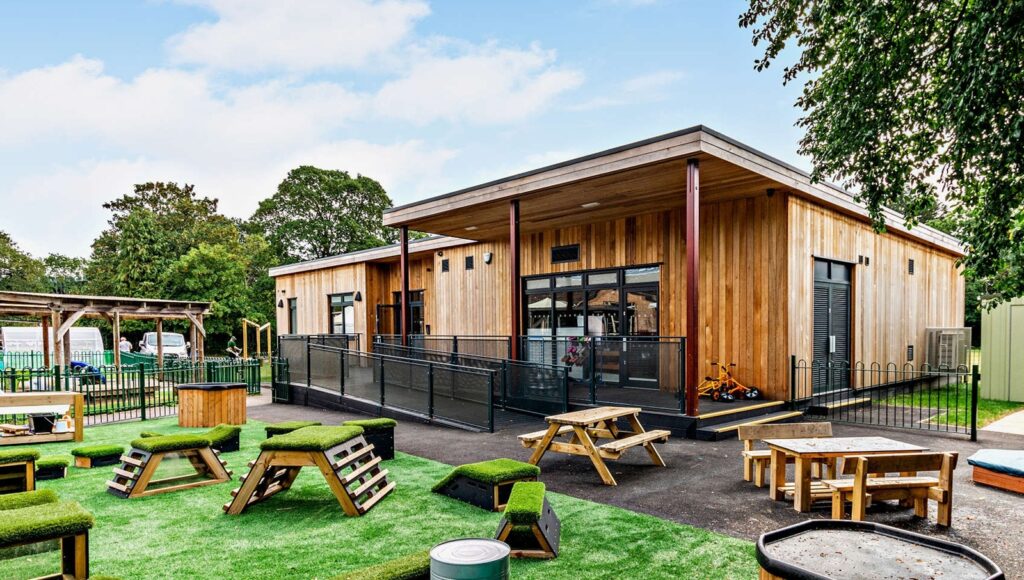
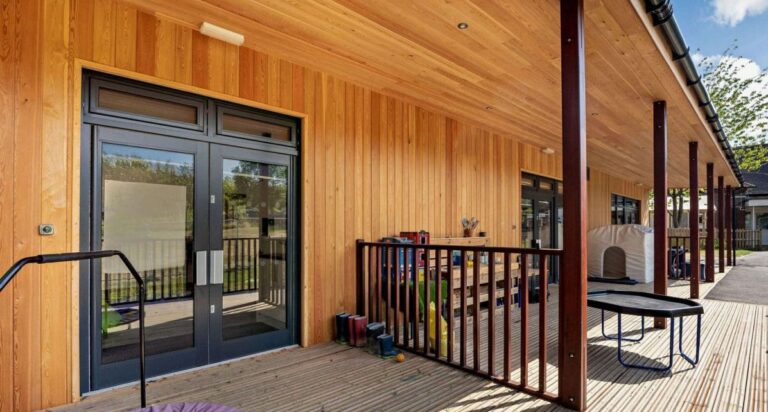
Biophilic design principles create this connection through natural materials, views of greenery, and seamless indoor-outdoor transitions. Timber surfaces, plants, and windows overlooking natural spaces create instinctive calm without elaborate justification.
Practical outdoor access means:
- Direct doors from classrooms to decked areas or sensory gardens
- Covered outdoor spaces for learning in all weather
- Quiet outdoor zones separated from noisier play areas
- Accessible pathways with firm, level surfaces (1500mm minimum width for wheelchair routes)
Our timber-frame modular buildings deliver biophilic benefits by default. The natural warmth of timber construction creates a fundamentally different atmosphere from steel-frame alternatives, and our single-storey designs allow direct outdoor access from every teaching space.
The SEMH building at Mountfield Heath shows this approach in practice, with classrooms opening onto therapeutic outdoor spaces designed to support emotional regulation.
Step 6: Choose Furniture That Enables Independence
The right furniture does more than fill a room. It actively supports independence and removes barriers before pupils even notice them.
Height-adjustable tables accommodate wheelchairs, standing work, and different-sized pupils without requiring multiple furniture sets. Adjustability also means the same classroom can serve different cohorts as needs change.
Flexible seating options recognise that sitting still on a standard chair isn’t achievable or desirable for all learners. Wobble stools, balance cushions, and floor seating give sensory-seeking pupils the movement input they need. Ensure any alternative seating still promotes healthy posture.
Accessible storage at child height with clear labelling promotes independence. Open shelving where pupils can see and reach resources reduces reliance on adult help for basic needs.
Specialist seating for pupils with physical disabilities needs occupational therapy input. Postural support, tray tables, and positioning equipment should be specified by professionals who understand each child’s needs.
Step 7: Plan Technology Integration From the Start
Technology is fundamental to modern SEND provision, yet classroom design often treats it as an afterthought. Communication devices, specialist software, interactive displays, and hearing loop systems all need infrastructure planned from the beginning.
Power provision deserves serious thought. Pupils using AAC devices, tablets, and powered wheelchairs need charging points accessible from their workstations. Floor boxes in central zones allow flexible furniture arrangements without trailing cables. Budget for more outlets than you think you need.
Interactive displays require careful positioning. Mount screens where wheelchair users can reach them and where pupils with visual impairments can sit close without neck strain. Consider glare from windows at different times of day.
Hearing loops benefit pupils with hearing aids and cochlear implants. Induction loop systems can cover whole classrooms or specific zones depending on need.
Secure storage for devices not in use prevents the morning scramble that eats into learning time. Charging stations with individual slots keep equipment organised and ready.

Step 8: Design for Future Flexibility
SEND cohorts change. This year’s intake might include pupils with profound physical disabilities requiring hoisting equipment. Next year could bring more children with autism who need quiet withdrawal spaces. A classroom that can’t adapt becomes obsolete.
Moveable partitions allow spaces to be divided or opened up as group sizes and activities change. Acoustic folding walls work better than curtains for genuine sound separation.
Modular furniture systems that can be reconfigured extend the useful life of your investment. Fixed benching looks neat but limits flexibility.
Services in accessible locations mean future modifications don’t require major building work. Power, data, and plumbing runs that anticipate expansion save money later.
This is perhaps the strongest argument for modular construction. Traditional buildings are inherently inflexible – moving walls means structural work, extending means foundations and planning applications that take months. Modular buildings can be extended or reconfigured as needs change.
Our 60-place SEND facility at Beacon Hill School was designed with future expansion in mind, allowing the school to respond to changing demand without starting from scratch.
Step 9: Work Within Budget Constraints
Perfect shouldn’t prevent progress. Most schools can’t overhaul everything at once, and phased implementation often produces better results because you learn what works before committing fully.
High-impact, low-cost changes to start with:
- Rearrange existing furniture to create zones
- Add soft furnishings to absorb sound
- Replace fluorescent tubes with LED alternatives
- Create a calm corner using screens you already own
Medium investment improvements for the next phase:
- Acoustic panels in key areas
- Height-adjustable furniture
- Improved storage systems
- Technology infrastructure upgrades
Major projects when funding allows:
- Purpose-built new spaces
- Significant building modifications
- Specialist sensory rooms
- Outdoor learning environments
The Condition Improvement Fund supports SEND provision improvements for academies and voluntary-aided schools. Many local authorities have dedicated capital funding for resourced provision. Build your case by documenting current limitations with photos and linking proposed changes to specific pupil outcomes.
Modular construction offers genuine cost advantages for major projects. Off-site manufacture reduces construction time and on-site disruption. Fixed-price contracts eliminate the budget overruns that plague traditional building projects. And faster completion means you’re meeting pupil needs sooner.
See These Principles in Practice
Understanding design principles is one thing. Seeing them work in real buildings is another.
The Oaks Specialist College
Our most recent SEND project, ‘The Point’ at The Oaks Specialist College, opened in November 2025. This £1.82 million facility provides 435m² of specialist space for 18-25 year olds with learning difficulties, including five classrooms, a media suite, and workshop areas equipped with ceiling track hoists and accessible self-care facilities.
The project demonstrates the financial case for well-designed local SEND provision. Kent County Council found that educating a physically disabled learner locally at The Oaks costs £42,000 per year – compared to £141,750 for out-of-county placements. The new building delivers estimated savings of £1 million per annum for the local authority.
CEO Gordon Tillman said: “Our learners and staff love this building! It is spacious and light, looks stylish and is a million miles away from a boring ‘bog standard’ education building.”
Hundred of Hoo Academy
The two-storey SEND block at Hundred of Hoo Academy demonstrates how thoughtful layout creates effective provision within mainstream settings, with six classrooms, quiet rooms, offices, and accessible toilets designed as an integrated whole.
Swalcliffe Park School
Swalcliffe Park School, a specialist provider for boys with autism and associated learning difficulties, has now commissioned three buildings from TG Escapes. Principal Kiran Hingorani noted: “The building itself fits really well into its natural surroundings and, in its own unique way, looks as stunning as the main school building. The boys love having their own space to enjoy their activities.”
The school’s decision to return to TG Escapes for multiple projects reflects the importance of finding a partner who genuinely understands SEND requirements – not just in terms of compliance, but in creating spaces where students can truly thrive.
Inclusive Learning Hub Concept
We’ve also developed a DfE-compliant inclusive learning hub concept, designed around 16 or 32 pupils, that brings together therapy, sensory, and social spaces in a format adaptable to many different school settings.
Start Your SEND Classroom Project
The best SEND classroom is one that responds to the pupils actually using it. Design theory only takes you so far. Real success comes from understanding your specific cohort, making thoughtful choices about the elements that matter most, and building in flexibility to adapt as needs change.
We offer a free design service to help you explore the right solution for your SEND needs. Our in-house architects have designed hundreds of educational spaces, and they understand both the regulatory requirements and the practical realities of creating environments where pupils with complex needs can thrive.
 Karl Stokes
What is Bulletin 104? A Complete Guide to SEND Building Guidelines
 Christopher Leese
Creating Calm, Purposeful Spaces for SEMH Learners
 Elle Courtonel