

- The Schools White Paper commits £3.7 billion in capital funding to create 60,000 new specialist SEND places across England
- Every secondary school will be expected to have a dedicated inclusion base – but fewer than one in five currently have one
- All schools will have a new statutory duty to produce an annual inclusion strategy, inspected by Ofsted
- New design guidance on inclusive school buildings is expected this spring, covering acoustics, breakout rooms, sensory gardens, and ventilation
- The new system won’t take effect before September 2030, but capital projects need planning now
The government’s Schools White Paper, Every Child Achieving and Thriving, was published on 23 February 2026 – and it represents the most significant shift in SEND provision in a generation. The headlines are striking: £4 billion in additional SEND funding over three years, 60,000 new specialist places, and an expectation that every secondary school in England will eventually have a dedicated inclusion base.
There’s plenty of commentary unpacking the policy detail. But if you’re a headteacher, business manager, or estates lead, you’re probably asking a more practical question: what does this actually mean for our buildings?
We’ve been following these reforms closely – from the Education Estates Strategy published earlier this month right through to yesterday’s white paper announcement. As a company that designs and builds SEND classrooms and facilities for schools across the UK, the infrastructure implications are something we think about every day. Here’s our breakdown of what the white paper means for your estate, and what you can start doing now.
The Funding and Infrastructure Headlines
The white paper covers a huge amount of ground – from curriculum reform to teacher training to EHCP changes. Not all of it affects your estate directly. Here are the announcements that do.
£3.7 billion in capital investment
This funding is being committed between 2025-26 and 2029-30 to create 60,000 new specialist SEND places across England (including 10,000 already delivered). This is the big number for school buildings. The funding flows through local authorities, so engaging your LA early about accessing high needs capital is essential.
Every secondary school will need an inclusion base
The DfE describes these as “dedicated safe spaces away from busy classrooms where pupils can access targeted support that bridges the gap between mainstream and specialist provision.” We’ll explain what this means in practice below – but the scale of the challenge is worth pausing on.
There are 3,456 state-funded secondary schools in England as of January 2025. According to DfE school capacity data, around 600 of those currently have SEN unit or resourced provision capacity – fewer than one in five. That means the vast majority of England’s secondary schools will need to establish dedicated SEND spaces over the coming years, whether through new builds, extensions, or significant adaptations to existing buildings.
New design guidance arriving this spring
The DfE has confirmed that new guidance on how mainstream schools can adapt buildings to improve inclusivity and accessibility will cover breakout rooms, accessible changing facilities, outdoor learning spaces including sensory gardens, and improvements to lighting, acoustics, and ventilation. We’ll be reviewing this guidance closely when it’s published and will share our analysis.
£1.6 billion through the Inclusive Mainstream Fund
This will go directly to schools, early years settings, and colleges over three years. It’s primarily aimed at interventions and staffing – funding things like small group language support and adaptive teaching. But schools may be able to use elements to support the physical adaptations needed for more inclusive provision.
The timeline gives you breathing room – but not as much as you might think
The new SEND system won’t take effect before September 2030, with assessments beginning in September 2029. But capital projects take time to plan, fund, design, and deliver. Schools that start conversations now will be far better positioned when demand peaks and contractors’ schedules fill up.
What Is an Inclusion Base – and Why Does the Design Matter?
This is the part of the white paper that matters most for your estate, and it’s also where the detail gets thin.
The government’s SEND reforms introduce a tiered support system. At the “Targeted Plus” level – for pupils with ongoing needs that can’t be met through universal provision alone – the white paper says students should have access to an inclusion base where needed. Think of it as a bridge: pupils remain on roll at their mainstream school but can access specialist support, therapeutic interventions, and a calmer environment when they need it, before returning to their regular classroom.
The white paper describes two models underpinning the inclusion base concept. Support bases will be commissioned and funded by individual schools or academy trusts. Specialist bases will be commissioned and funded by local authorities for children with more complex needs. Initially, specialist bases may sit within or alongside existing specialist schools, but over time the expectation is that they will also be established within mainstream secondary settings – so that every secondary school has either a support base or a specialist base. Either way, your school will be expected to provide a dedicated space – and it needs to work within your site, your budget, and your existing layout.
The DfE says inclusion bases could be “additional spaces within the school building or refurbishment or repurposing of existing space – for example, a spare classroom.” That’s a deliberately broad brief. And for some schools, adapting an existing room may be a practical starting point.
But our experience designing and building SEND facilities tells us that the physical environment makes a measurable difference to whether these spaces actually work for students. Research shows that classroom design can account for up to 16% of the variation in pupils’ learning progress. For students with autism, sensory processing differences, or social, emotional, and mental health (SEMH) needs, the gap between a repurposed classroom and a purpose-designed space isn’t cosmetic – it’s functional. We’ve explored this in detail in our guide to the design essentials of a modern SEND classroom.
A spare classroom with strip lighting, poor acoustics, and no breakout space is not going to deliver the outcomes the government is hoping for. An inclusion base that genuinely supports students needs careful design.
What Effective Inclusion Spaces Look Like
Based on the range of SEND classrooms we’ve designed and built, and drawing on guidelines including Building Bulletin 104 and Approved Document M, here’s what we’d expect effective inclusion bases to include:
Acoustic optimisation
This is non-negotiable. Background noise and reverberation cause real distress for students with sensory sensitivities, and poor acoustics undermine concentration for everyone. Inclusion spaces should meet BB93 acoustic standards, with sound-absorbing materials and layouts that minimise noise transfer from corridors and neighbouring rooms.
Flexible layouts
The space needs to work for different group sizes and activities throughout the day. Movable partitions, adaptable furniture, and zoning within a single space mean an inclusion base can serve small group interventions in the morning and one-to-one therapeutic work in the afternoon without anyone having to relocate.
It’s also worth remembering that different diagnoses call for different design responses. An ASD-focused space typically needs additional robustness, more breakout and sensory areas, and careful attention to transitions between rooms. A space designed primarily for speech, language, and communication needs might prioritise intervention rooms and a more free-flowing layout. Since inclusion bases will serve students with a wide range of needs – and those cohorts will change year on year – the design needs to accommodate that variety rather than optimise for a single profile.
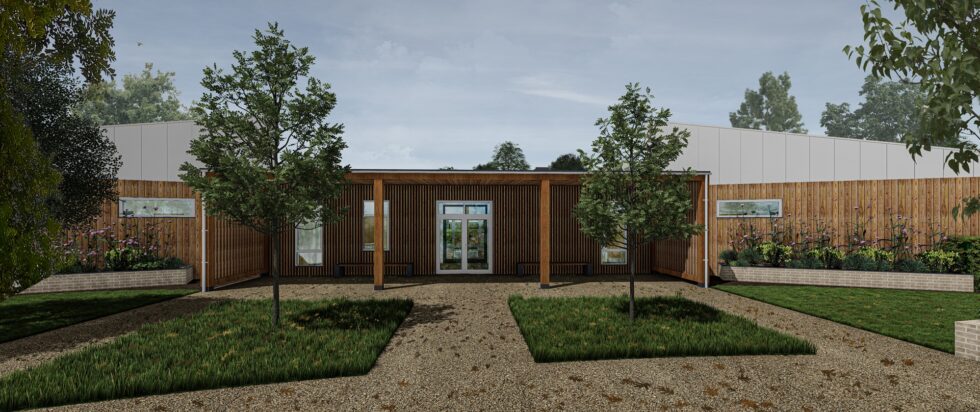
Layout also plays a subtler role than most people realise. One of the biggest challenges with ASD students in particular is getting them into a space in the first place – enclosed corridors and funnelled entrances can feel restrictive and trigger anxiety. In our inclusive learning hub concept, we addressed this with curved walls and angled rooms that create a sense of the space opening up as students move through it. Each transition feels like stepping into somewhere larger, even though the rooms themselves are carefully sized. It’s a design approach that encourages movement through the building rather than resistance to it – and it’s been one of the features that resonates most strongly with SEND leaders and local authorities we’ve spoken to.
Quiet zones and breakout rooms
These are essential for emotional regulation. Students accessing an inclusion base often need somewhere genuinely calm – low stimulation, soft textures, controlled lighting – to reset before returning to learning. We’ve written in more detail about creating calm, purposeful spaces for SEMH learners, and the principles apply equally to inclusion bases. A room without a breakout space is a room without a safety valve.
Natural light and biophilic design
These have a measurable impact on stress and wellbeing. Students in timber buildings have been shown to experience 8,600 fewer heartbeats per day compared to those in traditional classrooms, according to the Weitzer Parkett “Schools Without Stress” study. Floor-to-ceiling glazing, views of nature, natural materials, and indoor-outdoor connections aren’t luxury features – they’re how biophilic design boosts outcomes in education. For SEND students in particular, that connection to nature can be transformative.
Therapeutic intervention rooms
Dedicated spaces for speech and language therapy, occupational therapy, and one-to-one support mean specialists can work with students without displacing other activities. As the “Experts at Hand” service rolls out specialist banks in every local area – with the DfE predicting the average secondary school will receive over 160 days of dedicated specialist time per year – schools will need physical spaces for those professionals to use.
Full accessibility and compliance
This should go beyond the minimum. Our approach to going beyond accessibility in SEND buildings considers the full spectrum of physical and sensory needs, not just wheelchair access. This includes height-adjustable features, appropriate colour contrasts, hearing loop provision, and careful attention to wayfinding.
One area that’s increasingly important – and often overlooked in standard guidance – is the provision of dedicated hygiene rooms rather than relying solely on standard accessible toilets. A standard Doc M facility is around 3 square metres, with a toilet and sink already in place. For an older student who may still require personal care from two members of staff, that space simply isn’t adequate. A purpose-designed hygiene room provides the dignity that students deserve and the practical space that staff need. It’s a feature that Building Bulletin 104 doesn’t mandate, but that leading SEND designers now consider essential for most projects – and it’s something we routinely include in our SEND builds.
Proper ventilation and temperature control
This is particularly important for students with complex medical needs, where the ability to maintain consistent temperatures between 25-30°C and ensure excellent air quality can be a clinical requirement as much as a comfort one.
The overall goal is a space that keeps SEND students connected to the wider school community while giving them what they need to thrive – something we’ve explored in more detail in our piece on integrating SEND and mainstream students through thoughtful building design. Real-world projects like the SEND hub at Woking High School and the net-zero SEND facility at Allen Edwards Primary show what’s achievable when these design principles are applied properly.
Funding Your Inclusion Base
Schools will rightly ask how to pay for new or adapted SEND spaces. The good news is that multiple funding routes already exist – and the white paper’s capital commitments add to them.
High needs capital funding
The £3.7 billion allocated via local authorities is the primary route for creating new specialist places. If your school is looking to establish or expand SEND provision, engaging your LA about this funding should be an early priority. How this money will be distributed between new specialist school places and mainstream inclusion bases isn’t yet fully clear, so staying close to your local authority’s SEND planning process matters. We’ve recently published a more detailed look at strategic expansion for SEND through fully funded solutions that covers this in more depth.
The Condition Improvement Fund (CIF)
This is available to smaller academy trusts and voluntary-aided schools, with £470 million allocated for 2025-26 and roughly a 35% success rate on applications. A strong application starts with clear design specifications and reliable costings – and having a building partner involved early can help. Our guide to funding SEND buildings through CIF walks through the process.
School Condition Allocation (SCA)
This gives larger trusts direct control over £1.8 billion in 2025-26. MATs can prioritise SEND adaptations across their portfolio, and the modular approach allows for phased development that spreads investment across funding years while maintaining a consistent design language across sites.
Section 106 agreements
These can sometimes be directed toward SEND provision where new housing developments create demand for school places. We’ve delivered buildings through Section 106 agreements and can advise on whether this route applies to your situation.
Leasing as an alternative to capital expenditure
This is also worth considering. Under the IFRS16 Maintained Schools Secretary of State Finance Lease Class Consent 2024, modular buildings can be procured through leases – allowing trusts to avoid upfront capital spend and spread costs over the term. For a 32-place SEND facility, illustrative annual costs can start from around £10,000 per student place. It’s a route that’s particularly relevant for cash-constrained trusts that need to act quickly but can’t wait for capital funding cycles. Our strategic expansion for SEND through fully funded solutions page covers the leasing model and costs in more detail.
For a broader view of what’s available, our guide to education building funding options covers the main routes in more detail.
What This Means for Specialist Providers
While much of the white paper focuses on building mainstream capacity, the reforms also have significant implications for independent and non-maintained special schools. The 60,000 new specialist places being created aren’t all mainstream inclusion bases – many will be dedicated specialist provision commissioned by local authorities for children with the most complex needs.
For specialist providers, the challenge is different but no less urgent. Rising EHCP numbers have already pushed many settings to capacity, and the white paper’s emphasis on local provision – keeping students closer to home rather than in expensive out-of-area placements – means local authorities will be looking to commission new specialist places in their areas. Providers that can demonstrate high-quality, compliant facilities will be well placed to secure those commissions.
We work with specialist providers across the country on exactly this kind of expansion. Projects like our SEND home learning centre at The Oaks Specialist College and the 60-place SEND facility at Beacon Hill show how purpose-built modular provision can be delivered quickly and to the standards local authorities require. If you’re a specialist provider looking to expand capacity, the same funding routes and leasing options outlined above apply – and the sooner you engage with your local authority’s SEND planning process, the better positioned you’ll be.
What Should Schools Do Now?
The reforms don’t take effect until 2029 at the earliest, but that doesn’t mean standing still. Here’s where to focus your planning.
Audit your existing space
Could an inclusion base work within your current buildings, or would repurposing a classroom create capacity problems elsewhere? Be honest about whether an internal adaptation can genuinely meet SEND design standards – proper acoustics, breakout provision, therapeutic space, accessible facilities – or whether a standalone addition would serve students better.
Start planning your inclusion strategy now
The white paper introduces a new duty for all schools to produce an annual inclusion strategy, replacing the existing SEN information report. Ofsted will assess how leaders embed this strategy in practice. Having the right physical spaces in place – or a clear plan to create them – will be a core part of demonstrating that your school is meeting the new inclusion standards.
Understand which type of provision you’ll need
The white paper distinguishes between support bases (funded by schools or MATs) and specialist bases (commissioned and funded by LAs for more complex needs). Over time, both types will sit within mainstream secondary settings. Most schools will start with a support base. If your school already supports a high number of SEND students, you may want to discuss specialist base commissioning with your local authority.
Consider whether a standalone addition makes more sense than internal adaptation
If internal space is limited – which it often is in secondary schools already at capacity – a purpose-built modular building for your secondary school avoids disrupting existing provision and can be designed specifically around SEND requirements, from acoustics to accessibility. Modular buildings can also be installed in weeks rather than months, with minimal impact on the school day.
Get early advice on your options
Understanding what’s possible on your site, what it would cost, and how funding could work is a sensible first step – whether you build with us or with someone else. Our contact page is the quickest way to start that conversation.
Have your say on the reforms
The SEND consultation is open until 18 May 2026. Schools that engage now help shape the guidance that will define how inclusion bases work in practice. Your response matters – particularly on questions about physical space requirements and design standards.
The Bottom Line
The Schools White Paper represents a genuine shift in how SEND provision will be delivered across England, and that shift has real implications for school buildings. Thousands of secondary schools will need dedicated inclusion spaces. Tens of thousands of new specialist places need creating. The funding is there, the political commitment is there, and the timeline – while long – gives you room to plan properly rather than rush.
What matters most is making sure those spaces are designed to genuinely support students, not just tick a compliance box. A repurposed classroom with a new sign on the door isn’t an inclusion base. A well-designed, properly specified space that meets BB93, BB104, and the DfE’s emerging design guidance – that’s an inclusion base.
If you’re starting to think about how your school could create that kind of space, get in touch with our team. We’d love to help you explore your options.

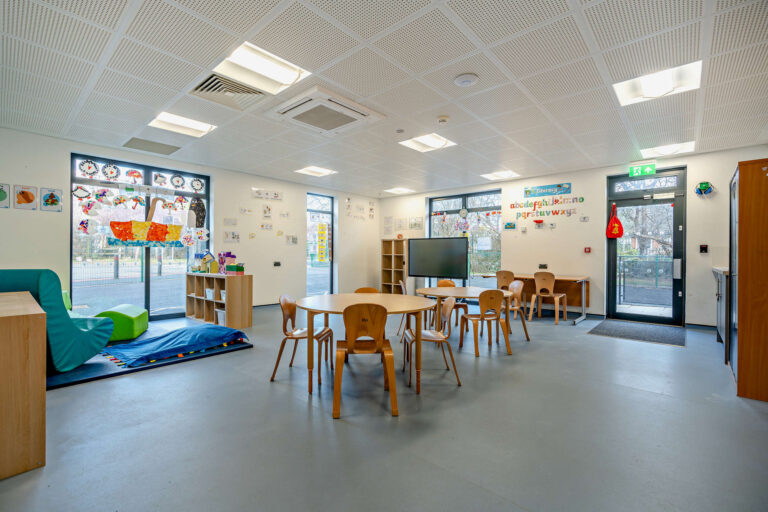
How to Design an Autism-Friendly Classroom That Supports Every Learner
 Christopher Leese
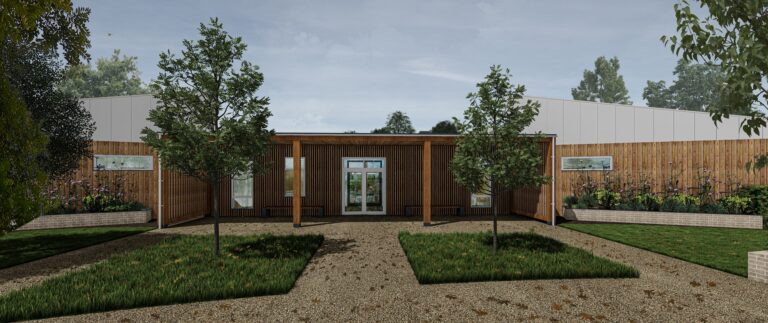
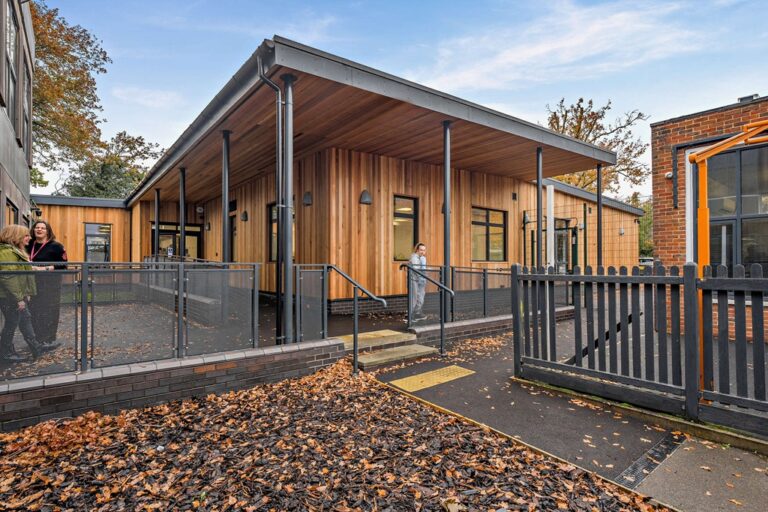
What is Bulletin 104? A Complete Guide to SEND Building Guidelines
Christopher Leese