
Across the UK education estate, schools and trusts are facing an unprecedented challenge: a sharp rise in Education, Health and Care Plans (EHCPs) colliding with a lack of physical capacity. For many Multi-Academy Trusts (MATs) and Local Authorities, this has created a financial “bleeding” point, where budgets are drained by expensive, out-of-area placements because internal provision simply isn’t available.
At TG Escapes, we believe the solution lies in rapid, high-quality expansion that makes financial sense. We have developed a pre-designed, fully financed Inclusive Learning Hub concept that allows schools to address this crisis head-on.
The Challenge: The Estate Barrier
The statistics are clear. With significant increases in additional needs such as ASD and SEMH, the demand for specialist spaces is outstripping supply; young people with SEND now represent almost 20% of the total student population. Every student not accommodated within their local area often requires an independent or out-of-area placement.
The barrier is often the estate itself. Existing buildings are at capacity, and traditional expansion projects take 2-3 years to deliver—time that vulnerable students do not have.
The Solution: The Inclusive Learning Hub
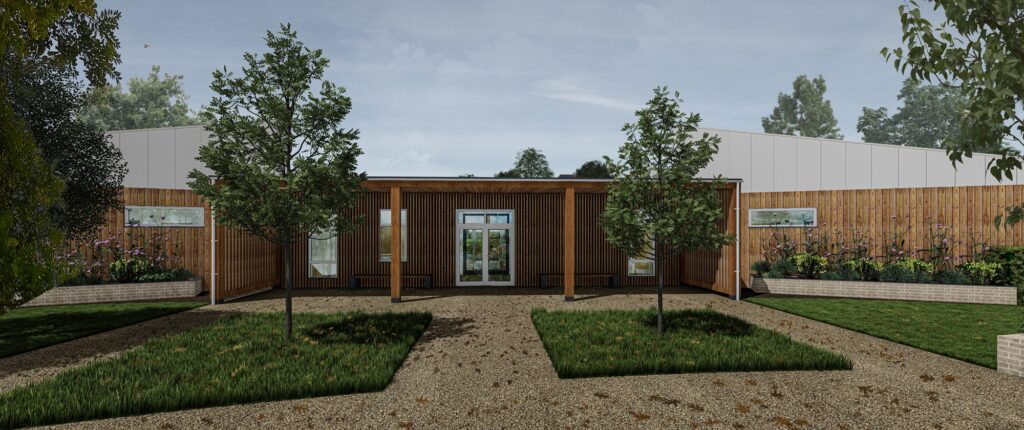
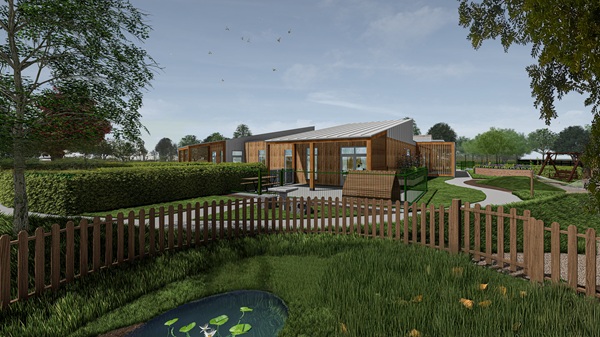
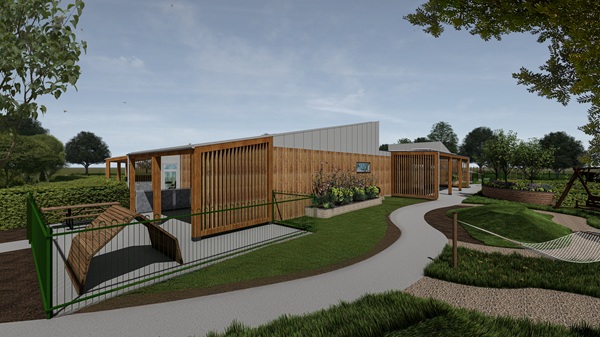
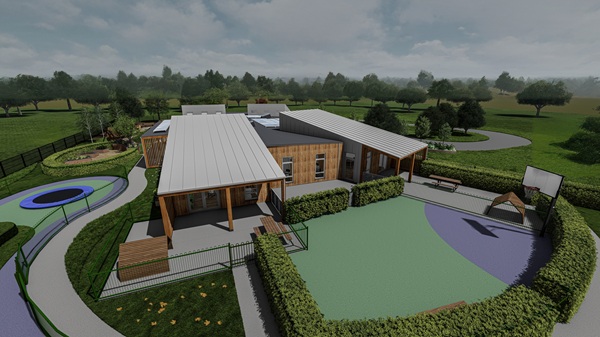
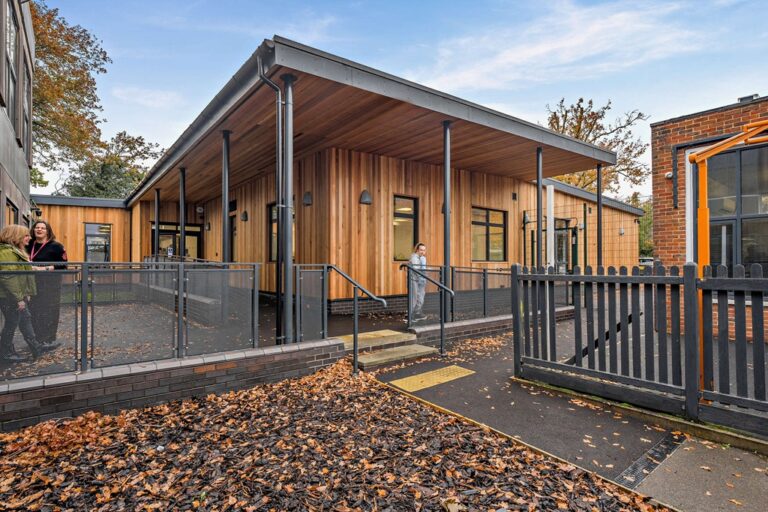
Developed in partnership with leading SEND architects Haverstock and The Blue Iris Consultancy, our Inclusive Learning Hubs are not retrofitted classrooms. They are purpose-built specialist facilities designed to facilitate mainstream inclusion.
Available in three models (16, 32, and 64 places), these hubs feature:
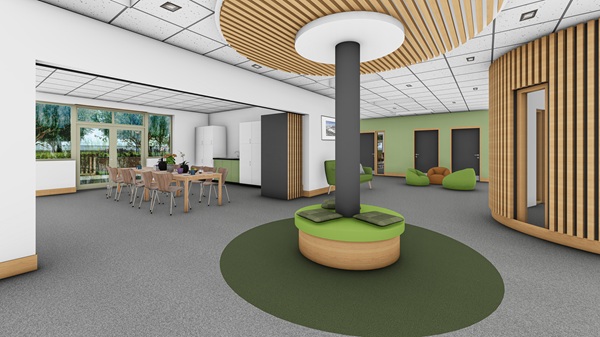
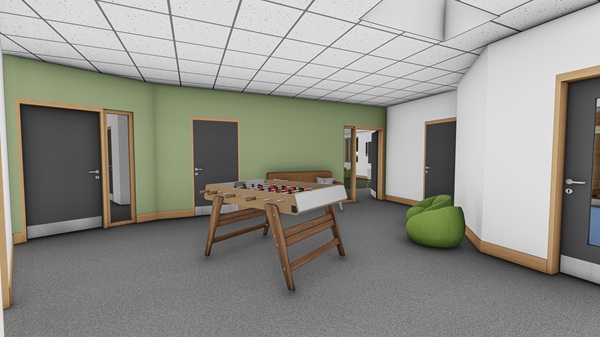
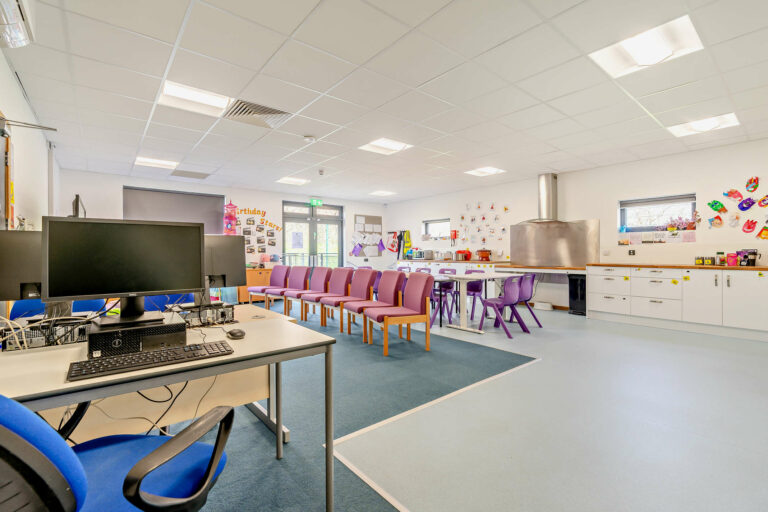
- Specialist Spaces: Dedicated therapy rooms, sensory spaces, hygiene rooms, and de-escalation zones.
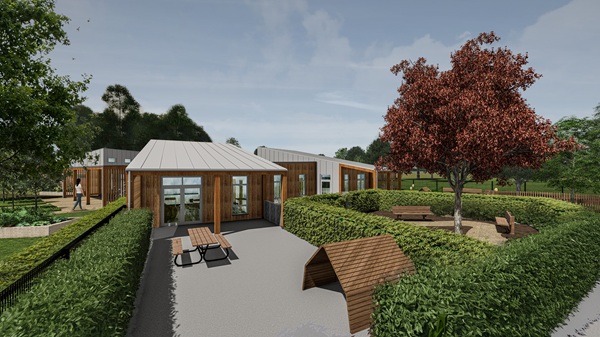
- Biophilic Design: Utilising natural materials and light to lower stress (cortisol) levels, acting as a “Third Teacher” to improve behaviour and educational outcomes.
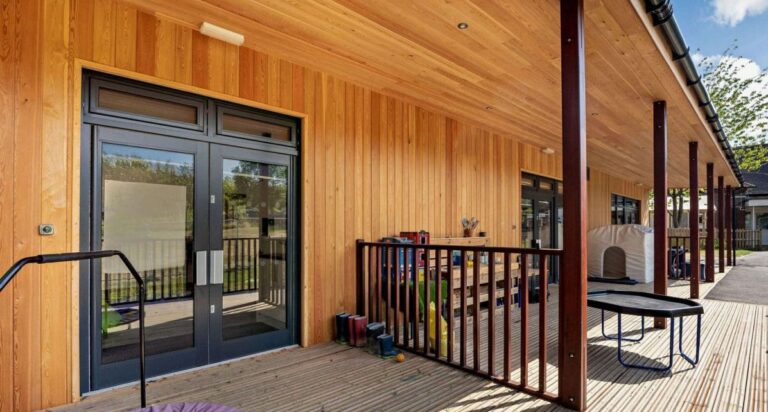
- Indoor/Outdoor Flow: Direct access from classrooms to secure outdoor regulation zones.
- Impact: Improved behaviour, enhanced educational outcomes, reduced exclusions, and better staff retention.
Crucially, these buildings are designed to meet DfE Building Bulletin requirements and are fully compliant for Local Authority commissioning, adhering to rigorous output specifications for robustness, acoustics, and fire safety.
The “Invest to Save” Financial Model
The most compelling argument for these hubs is financial. By building local capacity, Trusts can help support students within their local communities and save LA’s the significant cost of out-of-area placements.
The ROI is clear: A recent study by Kent County Council showed that out-of-area placements can cost up to £142,000 per annum. In contrast, our financing model demonstrates a significantly lower cost per student place for a high-specification new building:
- 16-Place Setting: Approx. £90.6k per student place (Capital cost ~£1.45m).
- 32-Place Setting: Approx. £72.3k per student place (Capital cost ~£2.3m).
- 64-Place Setting: Approx. £65.6k per student place (Capital cost ~£4.2m).
Running Costs: Net Zero in Operation. Includes Air Source Heat Pumps and Solar PV as standard. Lower energy costs mean more investment in students.
A Leasing Solution – “Klarna for MATs”
To avoid large upfront capital expenditure and preserve cash flow, these modular buildings can be procured through lease financing, permitted through IFRS16 Maintained Schools Secretary of State Finance Lease Class Consent 2024. We have partnered with Education Finance Specialists Room 12 to help spread the cost for cash-strapped trusts.
NOT PFI: No maintenance contracts so while the cost is fixed, the building is your responsibility from day 1 for all of it’s 50-year lifespan.
Aligned with DfE expectations: Leasing arrangements well established across the education sector and designed to support prudent financial management around asset use and value for money.
Illustrative leasing costs
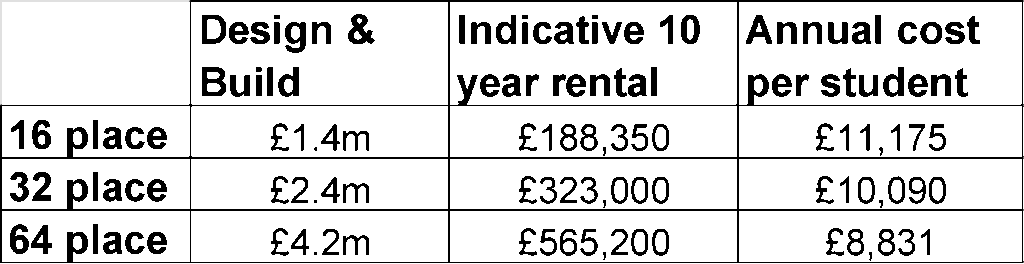
This predictable cost allows schools to plan effectively while retaining the asset for its 50-year lifespan. The cost of the agreement for the 32 place is £830k over the term, (£83k per annum) approx. 3.46% per year.
Planning Delays: Our steps to mitigate
Pre-planning packs: help to accelerate the planning process, reducing the wait.
Permitted Development: strategic design tailored to align with permitted development rights where site-specific parameters allow, offering a pathway for streamlined delivery.
Flexibility of Modern Methods of Construction: can be adapted or expanded as needs change, giving schools the agility to respond to fluctuating pupil numbers, or long-term estate strategies. Staged builds can appeal to planners in certain circumstances.
Speed of Delivery: Months, Not Years
We understand that speed is critical. Thanks to modern methods of construction and off-site manufacturing, we can deliver a fully operational building in a fraction of the time of a traditional build:
- 16-Place Hub: ~24 weeks onsite.
- 32-Place Hub: ~30 weeks onsite.
- 64-Place Hub: ~50 weeks onsite.
Our modular approach minimises disruption to the school day, avoiding the noise, dust, and heavy plant traffic that can unsettle unregulated students or disrupt exams.
Next Steps
We are inviting Trusts to identify a pilot site with high SEND demand. TG Escapes can provide a complimentary Design & Viability Consultation to help you visualise how an Inclusive Learning Hub could fit your site and your budget.
Don’t let the estate barrier hold back your students’ potential. Contact us today to secure high-quality, compliant capacity.

What is Bulletin 104? A Complete Guide to SEND Building Guidelines
 Christopher Leese
Creating Calm, Purposeful Spaces for SEMH Learners
 Elle Courtonel
Designing SEND Classrooms for Neurodivergent Learners
Elle Courtonel